
Research Models & Evidence
PEPTIDES BIO / MATERIAL RECORD
Epithalon 10mg
Research-use peptide material record: pack format, specifications and COA/SDS request for qualified laboratory review.
RESEARCH USE ONLYRUO
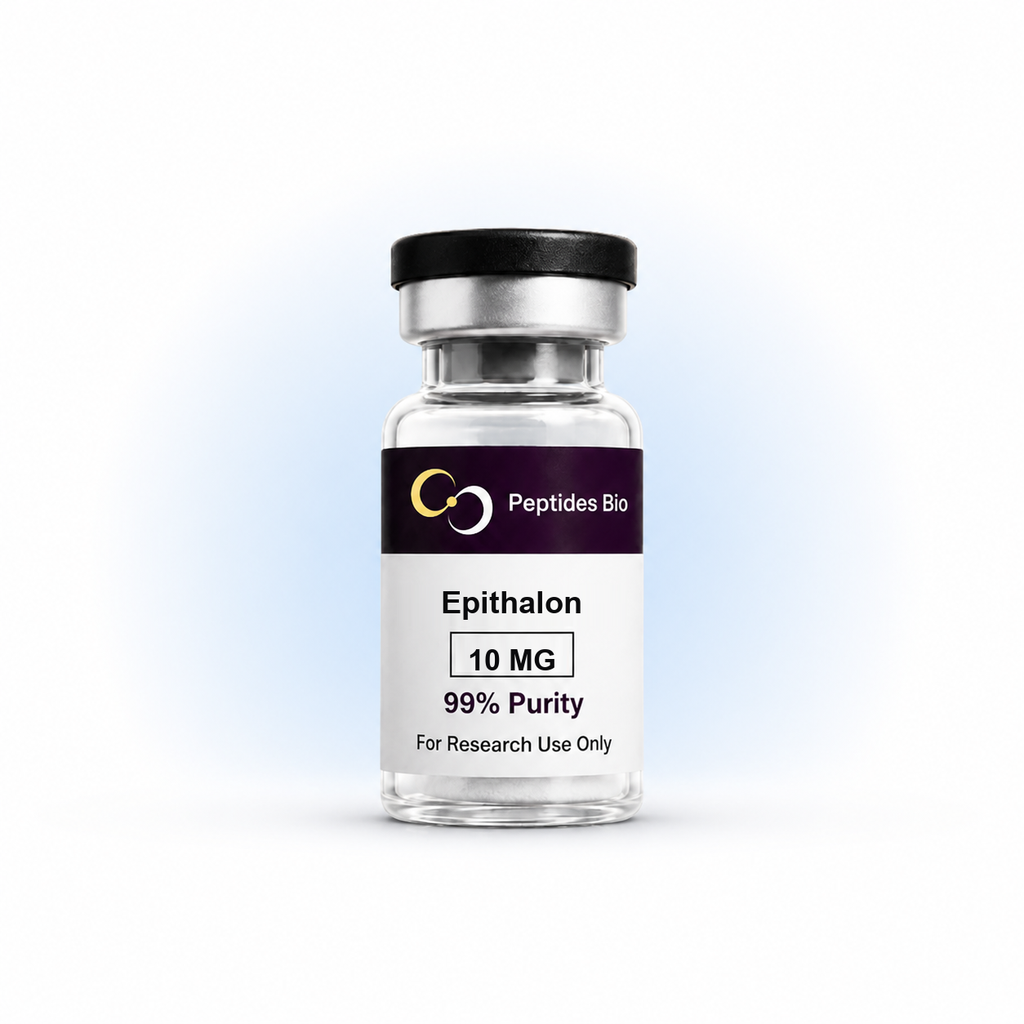
Epithalon 10mg
Important NoticeThis product is for use only in vitro research. It is strictly prohibited for human injection, clinical treatment, food addition or any animal experiments. Please read our terms and conditions carefully before placing an order.
Volume pricing
Configured totals update at each quantity threshold.
Configured total$10.16
Request COA / MSDS
Research record
Pending manual confirmationResearch overview
Epithalon (also known as Epitalon or AEDG) is a synthetic tetrapeptide composed of four amino acids (Ala-Glu-Asp-Gly). Its core mechanism of action centers on telomerase regulation and neuroendocrine system restoration: it upregulates telomerase activity through epigenetic activation of the hTERT promoter, restoring enzymatic activity and elongating telomeres in telomerase-negative human fibroblasts, making it one of the very few molecules demonstrated to reactivate the telomerase gene in somatic cells. As a pineal peptide analog, it restores age-related circadian rhythm disruptions in melatonin and cortisol secretion. Its geroprotective effects are further supported by multiple mechanisms, including antioxidant, neuroprotective, and anti-mutagenic activities.
Research reference
Product FAQ
What is Epithalon?
Epithalon (also known as Epitalon) is a synthetic tetrapeptide with the sequence Ala-Glu-Asp-Gly. This compound is renowned for its ability to extend telomeres by activating telomerase, and thus has gained significant attention in the fields of anti-aging and longevity research.
What is the mechanism of action of Epithalon?
Epithalon works through several primary mechanisms:
· Telomerase activation: Activates telomerase reverse transcriptase (TERT), lengthening telomeres and delaying cellular senescence
· Melatonin modulation: Stimulates the pineal gland to produce melatonin, restoring age-related declines in melatonin rhythmicity
· Gene expression regulation: Modulates the expression of approximately 100 genes associated with aging
· Oxidative stress resistance: Reduces ROS production and enhances cellular antioxidant defenses
· Immunomodulation: Modulates immune responses by improving thymus and immune cell function
Does Epithalon have research value for the immune system?
Yes. Studies show Epithalon modulates immune function through multiple pathways:
· Promoting T cell proliferation and differentiation
· Enhancing natural killer (NK) cell activity
· Increasing thymus mass (reversing age-related thymic involution)
· Improving antibody responses
· Modulating cytokine production
This makes it potentially valuable in research on immunosenescence and infection prevention.
What are the main research areas for Epithalon?
· Anti-aging and lifespan extension
· Telomere length regulation
· Age-related diseases (cardiovascular, neurodegenerative)
· Sleep cycle regulation (melatonin modulation)
· Immune system function modulation
· Retinal and eye disorders
· Cancer research (as a preventive and adjunctive agent)
Data sheet
Manual confirmation- Material Type
- Single material
- Purity Identity
- ≥99% purity
- Molecular Weight
- 390.35 g/mol
- Pack Size
- 10mg
- Molecular Formula
- C14H22N4O9
- CAS Number
- 307297-39-8
- Amino Acid Sequence
- Ala-Glu-Asp-Gly
- PubChem CID
- 219042
- Storage conditions overview
- Storage typeLong-termTemperature-80°CDuration2-3 yearsNotesSealed, dark, minimal openingStorage typeStandardTemperature-20°CDuration1-2 yearsNotesSealed, dark, moisture-proofStorage typeShort-termTemperature4°CDuration1-2 weeksNotesTemporary storage, use promptlyStorage typeWorking SolutionTemperature4°CDuration1-7 daysNotesReconstituted, short-term, avoid freeze-thaw
Related research guides
Review before you request.
Quality & Documentation
Epithalon and Epitalon: Cell-Line Source Scope and Documentation Review
A research-use-only review of Epithalon/Epitalon terminology, a defined cell-line source, and separate received-material documentation.Read guideResearch Use Policy