
Research Use Policy
PEPTIDES BIO / MATERIAL RECORD
Oxytocin 10mg
Research-use peptide material record: pack format, specifications and COA/SDS request for qualified laboratory review.
RESEARCH USE ONLYRUO
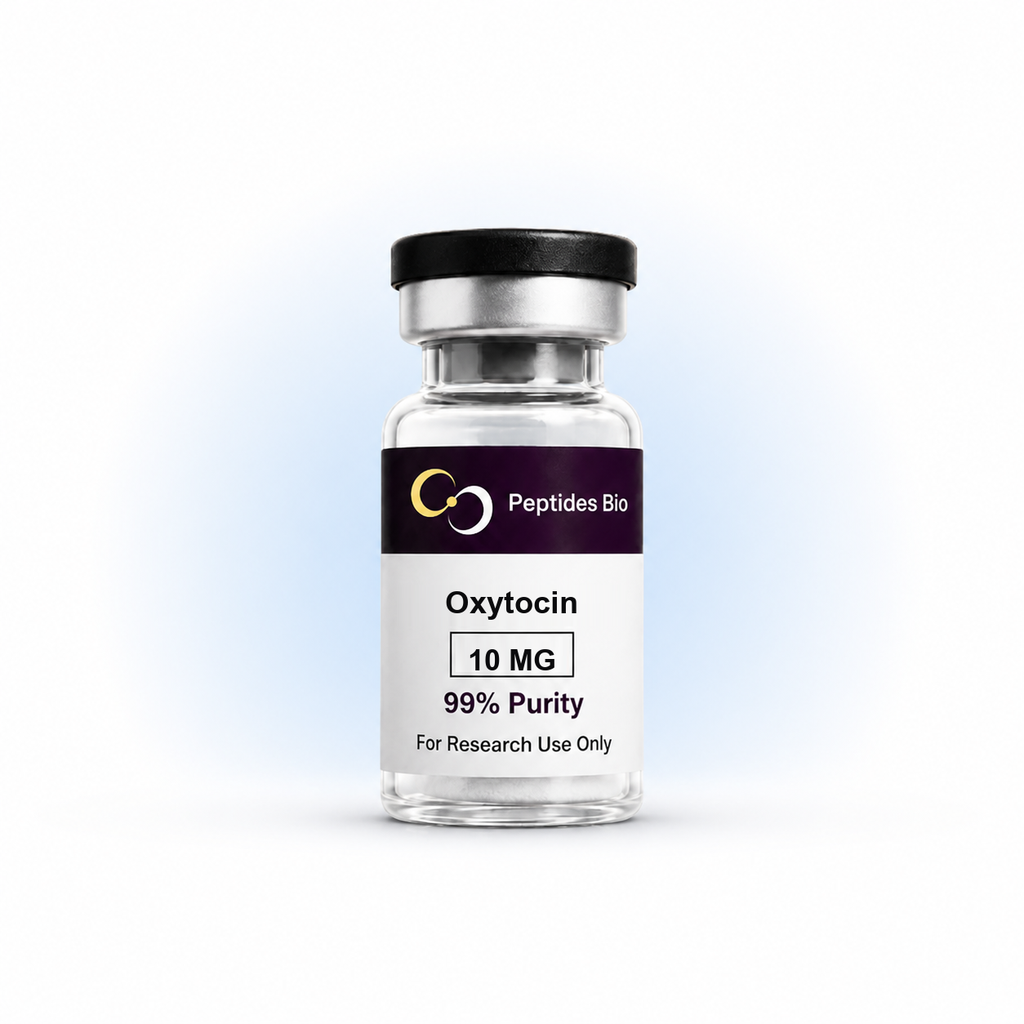
Oxytocin 10mg
Important NoticeThis product is for use only in vitro research. It is strictly prohibited for human injection, clinical treatment, food addition or any animal experiments. Please read our terms and conditions carefully before placing an order.
Volume pricing
Configured totals update at each quantity threshold.
Configured total$22.85
Request COA / MSDS
Research record
Pending manual confirmationResearch overview
Oxytocin is a synthetic cyclic nonapeptide neurohormone featuring a conserved intramolecular disulfide bond between Cys¹ and Cys⁶, which forms a 20‑membered thiosemicycline ring—a structural motif shared with the closely related neurohormone vasopressin. Produced via solid‑phase peptide synthesis, oxytocin exerts its effects through the oxytocin receptor (OTR), a type I G protein‑coupled receptor and one of the most extensively studied neuropeptide targets in biomedical research. As a flagship signaling peptide in preclinical neuroscience, reproductive endocrinology, and behavioral pharmacology, oxytocin has been the subject of extensive investigation. OTR is widely expressed across the central nervous system, uterine smooth muscle, mammary tissue, and multiple peripheral organs. In vitro studies using human muscle cell preparations have characterized OTR‑mediated activation of Gq/11‑coupled phospholipase C (PLC), leading to intracellular calcium mobilization and phosphatidylserine hydrolysis as primary downstream readouts. These studies also clarified the mechanism by which PLC contributes to pertussis toxin‑insensitive G‑protein signaling in peripheral uterine cells. Concurrently, in vivo rodent work has explored central oxytocin signaling within hypothalamic circuits, documenting activity‑dependent, dynamic neuropeptide release from dendritic compartments and elucidating the role of intracellular calcium stores in regulating this release. Collectively, these findings establish oxytocin as a key reference compound in neuropeptide research, with OTR‑mediated signal transduction operating across both central and peripheral biological systems.
Research reference
Product FAQ
What is Oxytocin?
Oxytocin is a cyclic nonapeptide (9 amino acids) synthesized primarily in the supraoptic and paraventricular nuclei of the hypothalamus and released by the posterior pituitary gland. It functions as both a hormone and a neurotransmitter, playing multiple important physiological roles in mammals. Its most well-known functions are promoting uterine contractions during childbirth and milk ejection during lactation, earning it the nickname "the love hormone." In research, it is also involved in social behavior, emotional regulation, and stress responses.
What is the mechanism of action of Oxytocin?
Oxytocin works by binding to and activating the oxytocin receptor (OXTR), a G protein-coupled receptor. OXTR activation mediates a series of downstream effects through intracellular signaling pathways (primarily the PLC/IP3 pathway). In the central nervous system, oxytocin acts as a neurotransmitter or neuromodulator, playing an important role in regulating social behavior, emotion, and stress responses. Peripherally, it acts on target organs such as the uterus and mammary glands via the bloodstream.
Is there clinical research supporting Oxytocin?
Yes. Oxytocin has nearly a century of clinical use history. It was first synthesized in 1948 and is now widely used in clinical practice worldwide.
Does Oxytocin have research value in autism spectrum disorder?
Yes. Due to oxytocin's involvement in social cognition and emotional regulation, its potential therapeutic value in autism spectrum disorder (ASD) has attracted widespread attention. Studies suggest that oxytocin may improve social interaction, emotional recognition, and empathy in ASD patients. However, results are not entirely consistent—some studies show limited effects, and the optimal dose, administration route, and long-term safety require further investigation.
Does Oxytocin have research value in psychiatric disorders?
Yes. Oxytocin has been extensively studied in various psychiatric disorders including anxiety, depression, PTSD, and social phobia. Its mechanisms include modulating amygdala activity, inhibiting overactivation of the HPA axis, and enhancing prefrontal cortex control over emotions.
What are the main research areas for Oxytocin?
· Labor induction and postpartum hemostasis
· Lactation promotion
· Autism spectrum disorder (ASD)
· Social anxiety and affective disorders
· Post-traumatic stress disorder (PTSD)
· Pain modulation and analgesia
· Wound healing and tissue repair
·Obesity and metabolic regulation
Data sheet
Manual confirmation- Material Type
- Single material
- Purity Identity
- ≥99% purity
- Molecular Weight
- 1007.19 g/mol
- Pack Size
- 10mg
- Indicative Price
- $22.85
- Molecular Formula
- C43H66N12O12S2
- CAS Number
- 50-56-6
- Amino Acid Sequence
- Cys-Tyr-Ile-Gln-Asn-Cys-Pro-Leu-Gly-NH2(Cys1-Cys6 )
- PubChem CID
- 439302
- Storage conditions overview
- Storage typeLong-termTemperature-80°CDuration2-3 yearsNotesSealed, dark, minimal openingStorage typeStandardTemperature-20°CDuration1-2 yearsNotesSealed, dark, moisture-proofStorage typeShort-termTemperature4°CDuration1-2 weeksNotesTemporary storage, use promptlyStorage typeWorking SolutionTemperature4°CDuration1-7 daysNotesReconstituted, short-term, avoid freeze-thaw