
PEPTIDES BIO / MATERIAL RECORD
Tesamorelin 5mg
Research-use peptide material record: pack format, specifications and COA/SDS request for qualified laboratory review.
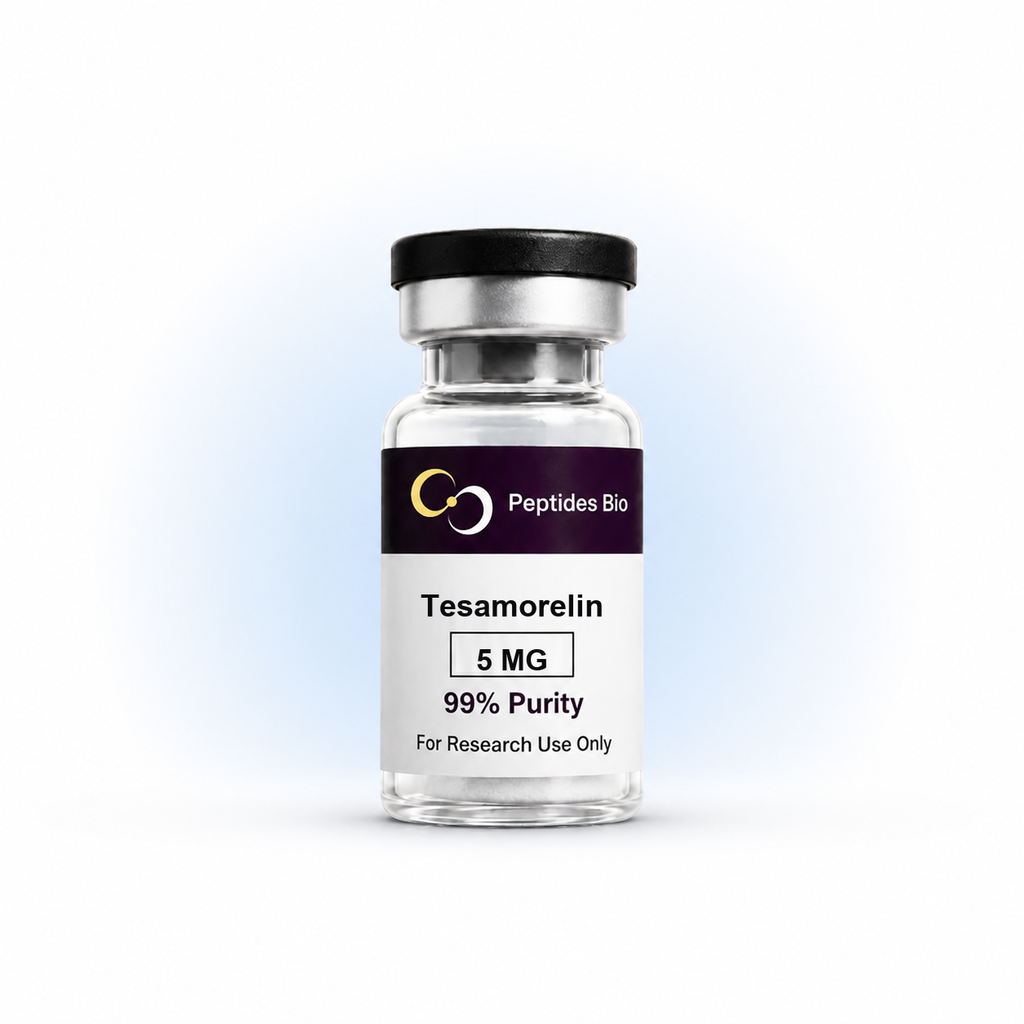
Tesamorelin 5mg
Volume pricing
Configured totals update at each quantity threshold.
Request COA / MSDS
Research record
Pending manual confirmationResearch overview
Tesamorelin is a synthetic 44‑amino‑acid peptide analogue and a stabilized, modified version of human growth hormone‑releasing hormone (GHRH). Its N‑terminus is modified (conjugated with a 3‑hexenyl group) to enhance molecular stability and pharmacokinetic properties. Tesamorelin activates GHRH receptors in the pituitary gland, stimulating the synthesis and pulsatile release of endogenous growth hormone (GH), which in turn acts on peripheral targets such as the liver to promote insulin‑like growth factor‑1 (IGF‑1) production. In addition, research has shown that it reduces hepatic fat content and slows fibrosis progression in non‑alcoholic fatty liver disease (NAFLD). Tesamorelin is currently the only drug approved in the United States for the reduction of abdominal fat in patients with HIV‑associated lipodystrophy.
Research reference
Product FAQ
What is Tesamorelin?
Tesamorelin is a synthetic 44-amino acid peptide analogue of endogenous growth hormone-releasing hormone (GHRH). It works by binding to and activating GHRH receptors in the anterior pituitary, stimulating the pulsatile release of growth hormone (GH), which in turn regulates fat metabolism and body composition. It was approved by the FDA in 2010 under the brand name Egrifta®.
What is the mechanism of action of Tesamorelin?
As a GHRH analogue, tesamorelin binds to GHRH receptors in the pituitary, stimulating the synthesis and pulsatile release of GH. Elevated GH levels promote the production of IGF-1 in the liver and peripheral tissues, exerting dual effects of lipolysis (breaking down visceral fat) and anabolism (increasing lean body mass). Compared to direct GH injection, this pulsatile release pattern more closely mimics the physiological state and offers a better safety profile.
Does Tesamorelin have research value for NAFLD?
Yes. Given its significant reduction in hepatic fat percentage, Tesamorelin is being actively investigated in NAFLD. A clinical trial in obese NAFLD patients is evaluating whether tesamorelin can reduce liver fat and improve inflammation and fibrosis. Early evidence suggests beneficial effects on liver fat with no observed hepatotoxicity.
What are the main research areas for Tesamorelin?
· HIV‑associated lipodystrophy (visceral fat accumulation) — FDA‑approved indication
· Non‑alcoholic fatty liver disease (NAFLD) / MASLD
· Obesity and abdominal fat accumulation
· Hip fracture recovery
· Sleep disorders
· Mild cognitive impairment
Data sheet
Manual confirmation- Material Type
- Single material
- Purity Identity
- ≥99% purity
- Molecular Weight
- 5135.78 g/mol
- Pack Size
- 5mg
- Molecular Formula
- C221H366N72O67S
- CAS Number
- 218949-48-5
- Amino Acid Sequence
- YADAIFTNSYRKVLGQLSARKLLQDIMSRQQGESNQERGARARL
- PubChem CID
- 16137828
- Storage conditions overview
- Storage typeLong-termTemperature-80°CDuration2-3 yearsNotesSealed, dark, minimal openingStorage typeStandardTemperature-20°CDuration1-2 yearsNotesSealed, dark, moisture-proofStorage typeShort-termTemperature4°CDuration1-2 weeksNotesTemporary storage, use promptlyStorage typeWorking SolutionTemperature4°CDuration1-7 daysNotesReconstituted, short-term, avoid freeze-thaw