
Research Use Policy
PEPTIDES BIO / MATERIAL RECORD
TB-500 10mg
Research-use peptide material record: pack format, specifications and COA/SDS request for qualified laboratory review.
RESEARCH USE ONLYRUO
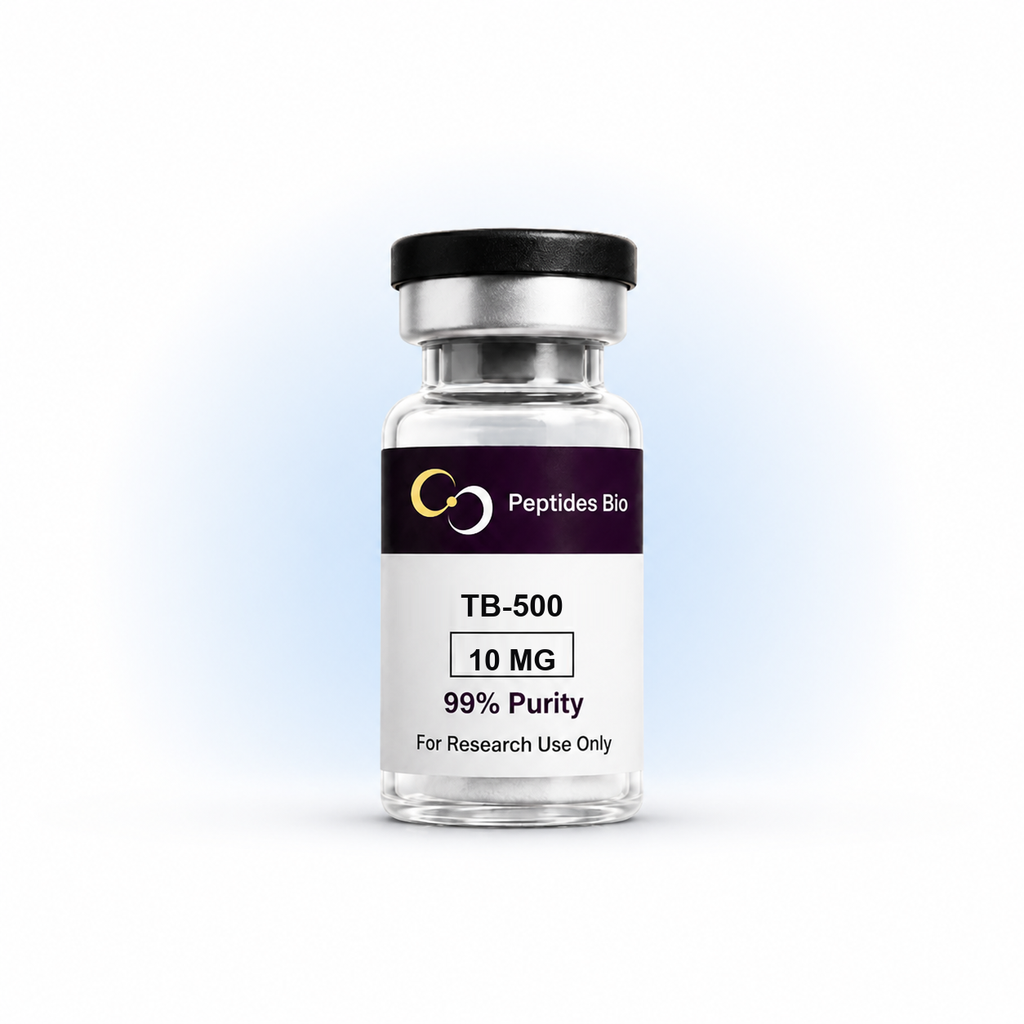
TB-500 10mg
Important NoticeThis product is for use only in vitro research. It is strictly prohibited for human injection, clinical treatment, food addition or any animal experiments. Please read our terms and conditions carefully before placing an order.
Volume pricing
Configured totals update at each quantity threshold.
Configured total$47.16
Request COA / MSDS
Research record
Pending manual confirmationResearch overview
TB‑500 (the synthetic form of thymosin β‑4, Tβ4) is a 43‑amino‑acid peptide with an N‑terminal acetylation and a critical LKKTETQ actin‑binding motif at positions 17–23. It belongs to the highly conserved β‑thymosin family (16 isomers) and is one of the most abundant intracellular peptides in mammalian cells. TB‑500 is prepared by solid‑phase peptide synthesis and functions as a G‑actin‑sequestering protein. TB‑500 plays a central role in preclinical studies of cytoskeletal biology and tissue remodeling. Its primary mechanism involves sequestering monomeric globular actin, thereby regulating the balance between G‑actin monomers and polymerized filamentous actin—a balance that governs cell migration, morphogenesis, and cytoskeletal reorganization. The conserved LKKTET motif is critical for actin binding; however, mutagenesis studies indicate that this motif alone exhibits weak G‑actin affinity, and that high‑affinity sequestration depends on additional contacts from flanking regions within the full‑length peptide. In vitro studies in endothelial cells, fibroblasts, and keratinocytes have documented enhanced endothelial differentiation, basement‑membrane‑like capillary formation, and directed cell migration, as well as extracellular matrix remodeling mediated by matrix metalloproteinases. In vivo rodent studies in skin wound, corneal injury, and cardiac ischemia models have reported accelerated full‑thickness skin wound closure, accompanied by increased angiogenesis and collagen deposition. Collectively, these findings span the cascade of tissue remodeling—from neovascularization and collagen deposition through the inflammatory‑to‑proliferative transition.
Research reference
Product FAQ
What is TB-500?
TB-500 is a synthetic peptide that is an active fragment of the naturally occurring protein thymosin beta-4. It differs from thymosin beta-4 in that it is chemically synthesized, has a smaller molecular weight, and may offer better bioavailability in research. Its primary effects include promoting cell migration, angiogenesis, and anti-inflammation.
What is the mechanism of action of TB-500?
TB-500 binds to actin to regulate cytoskeletal dynamics, promoting cell migration, proliferation, and differentiation. It also promotes angiogenesis (new blood vessel formation), reduces oxidative stress, modulates inflammatory responses, and enhances tissue remodeling. TB-500 may also activate the PI3K/Akt pathway to promote cell survival and tissue repair.
Is TB-500 a banned substance?
TB-500 is not specifically listed on the WADA Prohibited List at this time, but it is not approved for human use, and its angiogenic potential has raised theoretical concerns about the possibility of "blood doping" in competitive sports.
Does TB-500 have research value for corneal injury?
Yes. Thymosin beta-4 has been evaluated in Phase 3 clinical studies for dry eye disease and corneal injury. TB-500, as its active fragment, has shown similar properties in corneal epithelial cell migration and wound healing. Studies indicate it reduces corneal inflammation, promotes epithelial regeneration, and inhibits corneal neovascularization.
What are the main research areas for TB-500?
· Muscle, tendon, and ligament injury repair
· Cardiac repair following ischemia and myocardial infarction
· Skin wound healing and scar reduction
· Corneal injury repair
· Anti-inflammation and immunomodulation
· Hair growth
Data sheet
Manual confirmation- Material Type
- Single material
- Purity Identity
- ≥99% purity
- Molecular Weight
- 888.49 g/mol
- Pack Size
- 10mg
- Molecular Formula
- C38H68N10O14
- CAS Number
- 885340-08-9
- Amino Acid Sequence
- Ac-LKKTETQ
- PubChem CID
- 62707662
- Storage conditions overview
- Storage typeLong-termTemperature-80°CDuration2-3 yearsNotesSealed, dark, minimal openingStorage typeStandardTemperature-20°CDuration1-2 yearsNotesSealed, dark, moisture-proofStorage typeShort-termTemperature4°CDuration1-2 weeksNotesTemporary storage, use promptlyStorage typeworking SolutionTemperature4°CDuration1-7 daysNotesReconstituted, short-term, avoid freeze-thaw
Related research guides
Review before you request.
Quality & Documentation
TB-500 and Thymosin Beta-4: Nomenclature, Source Scope and Documentation Review
A research-use-only review of TB-500 and Thymosin beta-4 naming boundaries, a defined actin source, and separate batch documentation.Read guideMolecular Pharmacology
Thymosin Beta-4 and Actin: Reading a Defined In Vitro Source Record
A source-limited thymosin beta-4 actin record covering the in-vitro concentration, actin-state, and method-linked observations in PMID 8621582.Read guideResearch Models & Evidence