
Molecular Pharmacology
PEPTIDES BIO / MATERIAL RECORD
Melanotan I 10mg
Research-use peptide material record: pack format, specifications and COA/SDS request for qualified laboratory review.
RESEARCH USE ONLYRUO
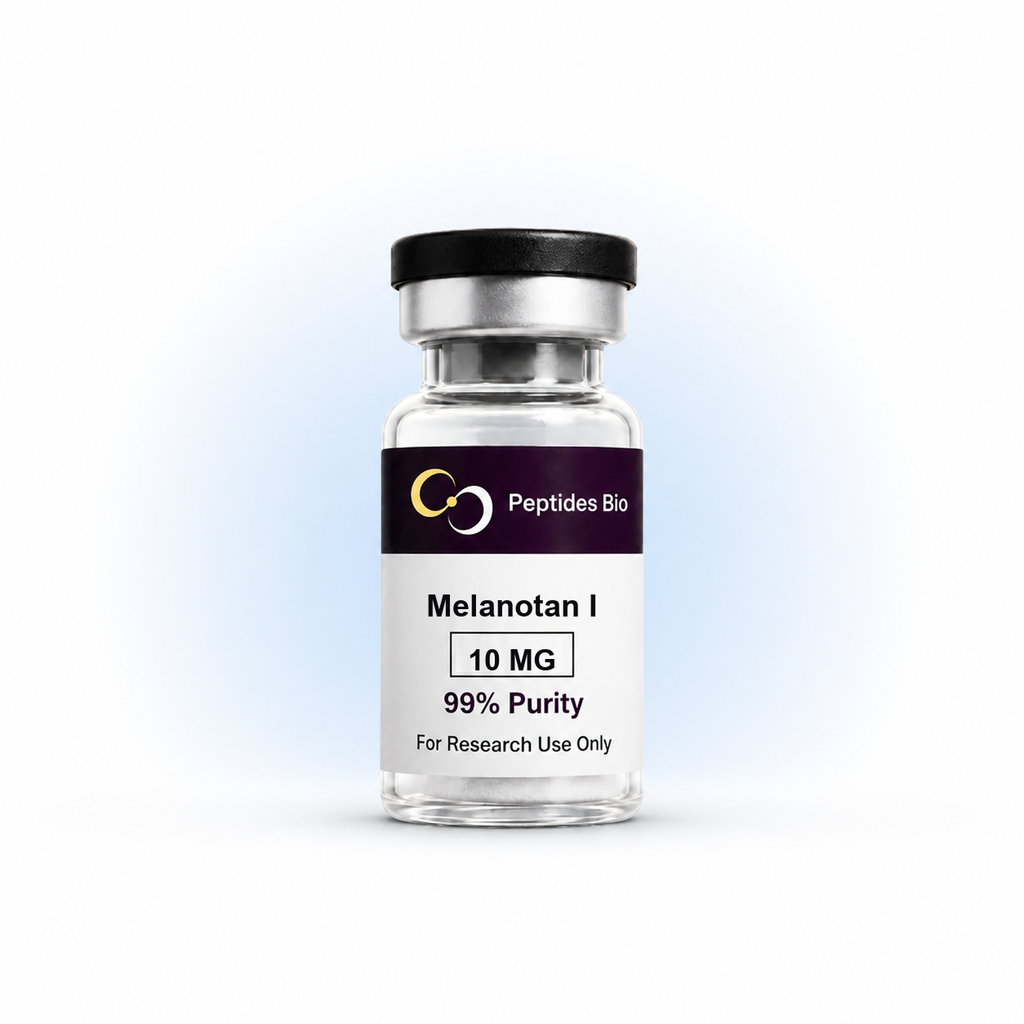
Melanotan I 10mg
Important NoticeThis product is for use only in vitro research. It is strictly prohibited for human injection, clinical treatment, food addition or any animal experiments. Please read our terms and conditions carefully before placing an order.
Volume pricing
Configured totals update at each quantity threshold.
Configured total$16.09
Request COA / MSDS
Research record
Pending manual confirmationResearch overview
Melanotan I (also known as Afamelanotide or MT‑I) is a synthetic cyclic tridecapeptide (13 amino acids) and a highly stable modified analogue of endogenous α‑melanocyte‑stimulating hormone (α‑MSH). As a potent, non‑selective melanocortin receptor (MCR) agonist, it exhibits high affinity for MC1R (Ki = 0.085 nM) and also activates MC3, MC4, and MC5 receptor subtypes. Its core mechanism involves specific activation of the MC1R receptor on melanocytes by mimicking α‑MSH, thereby stimulating melanin production and inducing skin tanning. Based on this mechanism, Melanotan I is widely used in research areas including photoprotection, sun‑induced skin cancer, melanoma, inflammation, and male erectile dysfunction.
Research reference
Product FAQ
What is Melanotan I?
Melanotan I (also known as MT-1) is a synthetic analogue of α-melanocyte-stimulating hormone (α-MSH), composed of 13 amino acids. It stimulates melanocytes to produce melanin by activating the melanocortin-1 receptor (MC1R), thereby inducing skin tanning. Unlike Melanotan II, Melanotan I is structurally closer to natural α-MSH and has higher selectivity for MC1R over other melanocortin receptors.
What is the mechanism of action of Melanotan I?
Melanotan I works by binding to and activating the MC1R receptor on the surface of skin melanocytes. Activated MC1R initiates a signaling cascade (primarily through the cAMP/PKA pathway), promoting the synthesis and activity of tyrosinase, which converts tyrosine into melanin. The resulting melanin (primarily eumelanin) accumulates in keratinocytes, providing darker skin color and natural protection against UV radiation.
Does Melanotan I have research value for photosensitive skin disorders?
Yes. Melanotan I has been most extensively studied in photosensitive skin disorders such as EPP. EPP patients suffer from the accumulation of photosensitive substances due to enzyme deficiencies, causing severe pain upon sunlight exposure. By increasing skin melanin content to provide photoprotection, Melanotan I has been shown to significantly reduce sun-induced pain and improve quality of life in EPP patients.
Does Melanotan I have research value for vitiligo?
Yes. Vitiligo is an autoimmune disease in which melanocytes are destroyed, leading to white patches on the skin. Theoretically, by stimulating melanin production in remaining melanocytes through MC1R agonism, Melanotan I may help repigment depigmented areas. Some exploratory studies are currently evaluating its potential in vitiligo treatment, but research in this area is still in its early stages.
What are the main research areas for Melanotan I?
· Skin photoprotection (prevention of UV damage)
· Artificial tanning (achieving skin color without prolonged sun exposure)
· Photosensitive skin disorders (e.g., erythropoietic protoporphyria, EPP)
· Vitiligo
· Repair of sun-related skin damage
· MC1R signaling pathway research
Data sheet
Manual confirmation- Material Type
- Single material
- Purity Identity
- ≥99% purity
- Molecular Weight
- 1646.85 g/mol
- Pack Size
- 10 mg
- Molecular Formula
- C78H111N21O19
- CAS Number
- 75921-69-6
- Amino Acid Sequence
- Ac-SYS-{Nle}-EH-{d-Phe}-RWGKPV-NH2; SYSXEHFRWGKPV
- PubChem CID
- 16154396
- Storage conditions overview
- Storage typeLong-termTemperature-80°CDuration2-3 yearsNotesSealed, dark, minimal openingStorage typeStandardTemperature-20°CDuration1-2 yearsNotesSealed, dark, moisture-proofStorage typeShort-termTemperature4°CDuration1-2 weeksNotesTemporary storage, use promptlyStorage typeWorking SolutionTemperature4°CDuration1-7 daysNotesReconstituted, short-term, avoid freeze-thaw
Related research guides