
Research Use Policy
PEPTIDES BIO / MATERIAL RECORD
MOTS-C 20mg
Research-use peptide material record: pack format, specifications and COA/SDS request for qualified laboratory review.
RESEARCH USE ONLYRUO
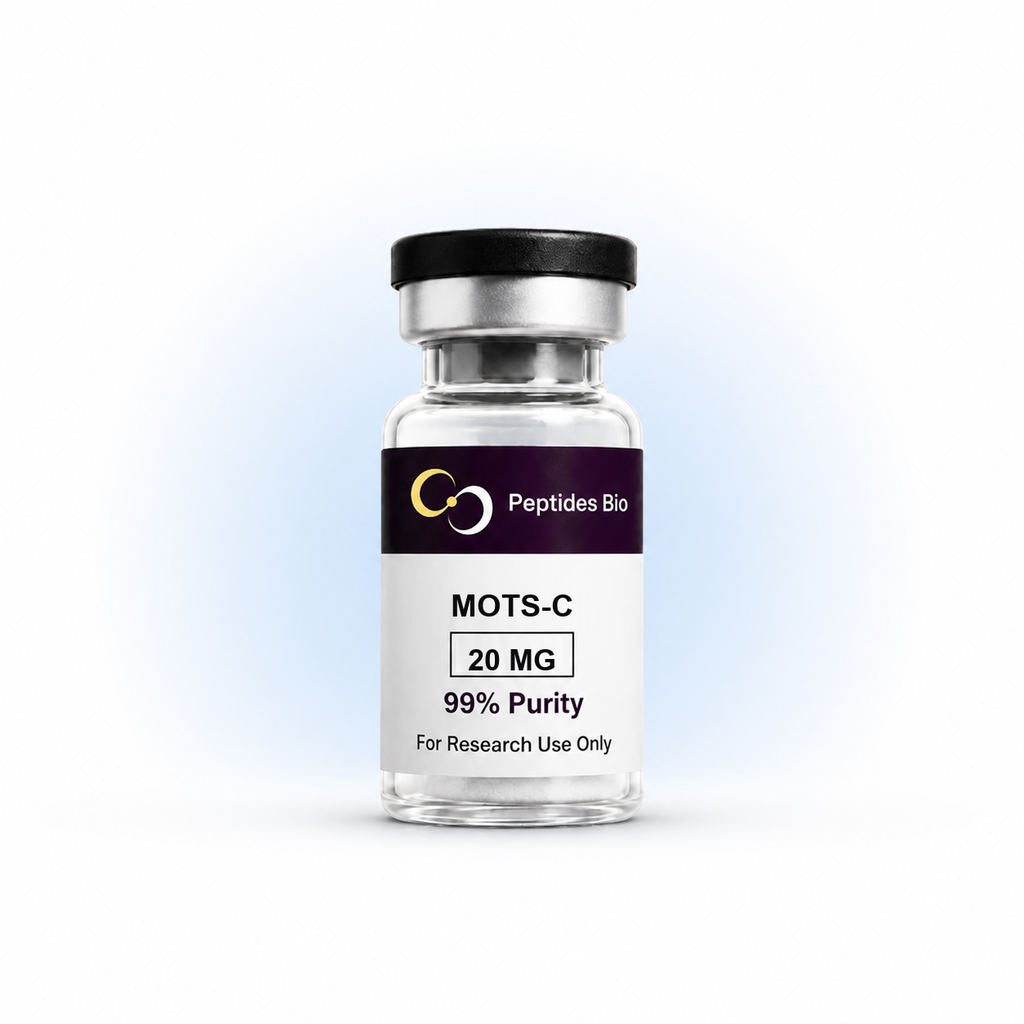
MOTS-C 20mg
Important NoticeThis product is for use only in vitro research. It is strictly prohibited for human injection, clinical treatment, food addition or any animal experiments. Please read our terms and conditions carefully before placing an order.
Volume pricing
Configured totals update at each quantity threshold.
Configured total$35.41
Request COA / MSDS
Research record
Pending manual confirmationResearch overview
MOTS‑C is a 16‑amino‑acid mitochondrial‑derived peptide (MDP) encoded by a short open reading frame (sORF) within the mitochondrial 12S rRNA region. As a key mediator of mitochondria‑to‑cell communication, MOTS‑C plays an essential role in maintaining systemic energy metabolism and metabolic homeostasis. Mechanistically, it promotes the accumulation of the endogenous AMP analog AICAR, thereby activating the AMPK pathway and downstream GLUT4 expression. Concurrently, it modulates the Nrf2/Keap1 antioxidant pathway and suppresses the NF‑κB inflammatory cascade. Studies have demonstrated that MOTS‑C induces cellular and systemic glucose uptake, improves insulin sensitivity, and exerts beneficial effects on obesity, diabetes, exercise capacity, and longevity regulation. Given that circulating MOTS‑C levels naturally decline with age, it represents a promising target for research into aging and age‑related diseases.
Research reference
Product FAQ
What is MOTS-C?
A 16‑amino acid peptide encoded by mitochondrial DNA that regulates metabolism via the AMPK pathway—often called an "exercise‑mimetic" peptide.
What is the mechanism of action of MOTS‑C?
It activates the AMPK pathway to regulate systemic energy metabolism, improve insulin sensitivity, and promote glucose uptake and fatty acid oxidation.
Is MOTS‑C naturally occurring?
Yes. MOTS‑c is naturally encoded by mitochondrial DNA and endogenously expressed in humans, particularly in skeletal muscle. Its expression is upregulated following exercise.
What is the relationship between MOTS-C and exercise?
Research has shown a bidirectional regulatory relationship between exercise and MOTS‑C:
· Exercise upregulates MOTS‑C levels – In healthy individuals, high‑intensity interval exercise can increase muscle MOTS‑C levels several‑fold within minutes.
· MOTS‑C enhances exercise performance – MOTS‑C administration in mice has been shown to improve aerobic capacity.
· Age‑related decline in MOTS‑C – Circulating MOTS‑C levels decrease with age, which may contribute to reduced physical activity in the elderly population.
What are the main research areas for MOTS‑C?
Metabolic disorders (obesity, diabetes), aging‑related diseases, inflammatory lung diseases, osteoarthritis, cardiovascular health, and exercise capacity.
Data sheet
Manual confirmation- Material Type
- Single material
- Purity Identity
- ≥99% purity
- Molecular Weight
- 2174.11 g/mol
- Pack Size
- 20mg
- Molecular Formula
- C101H152N28O22S2
- CAS Number
- 1627580-64-6
- Amino Acid Sequence
- MRWQEMGYIFYPRKLR
- PubChem CID
- 146675088
- Storage conditions overview
- Storage typeLong-termTemperature-80°CDuration2-3 yearsNotesSealed, dark, minimal openingStorage typeStandardTemperature-20°Duration1-2 yearsNotesSealed, dark, moisture-proofStorage typeShort-termTemperature4°CDuration1-2 weeksNotesTemporary storage, use promptlyStorage typeWorking SolutionTemperature4°CDuration1-7 daysNotesReconstituted, short-term, avoid freeze-thaw
Related research guides
Review before you request.
Research Models & Evidence
MOTS-C Nuclear Localization During Metabolic Stress: HEK293 Cell Records
A source-limited MOTS-C record of HEK293 metabolic-stress localization, AMPK comparisons, and nuclear measurements from PMID 29983246.Read guideQuality & Documentation
MOTS-C: A Research Overview for Material Review
A MOTS-C research guide covering mitochondrial-peptide context, model-based literature review, and material-record limits.Read guideLaboratory Records
MOTS-C: Classifying Evidence by Research Model
A MOTS-C research guide covering mitochondrial-peptide context, model-based literature review, and material-record limits.Read guideResearch Models & Evidence
MOTS-C Research Dosage: Study Units and Context
A source-limited reading of MOTS-C dosage contexts, separating endogenous human measurements, a timed mouse mg/kg crossover, and a fixed-microgram mouse co-administration record without creating a transferable dose range.Read guideResearch Models & Evidence