
PEPTIDES BIO / MATERIAL RECORD
NAD+ 500mg
Research-use peptide material record: pack format, specifications and COA/SDS request for qualified laboratory review.
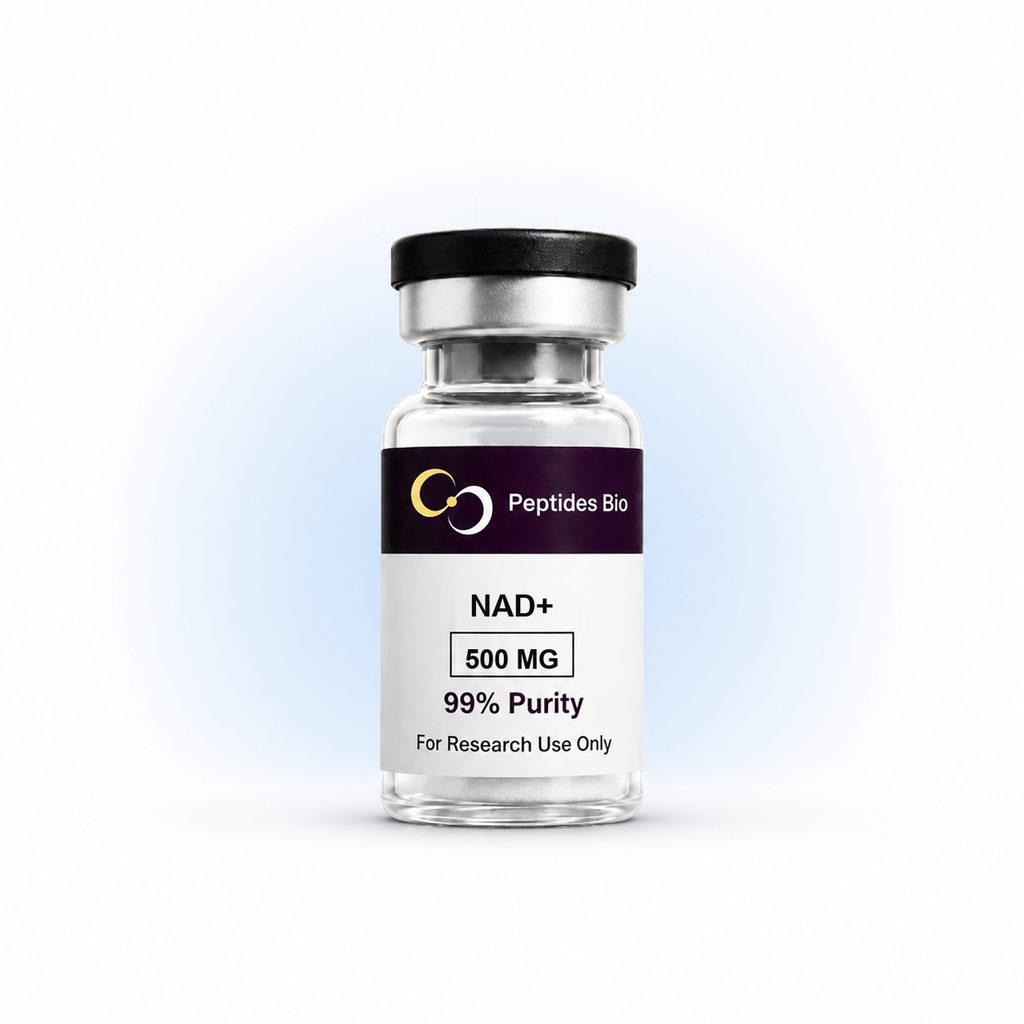
NAD+ 500mg
Volume pricing
Configured totals update at each quantity threshold.
Request COA / MSDS
Research record
Pending manual confirmationResearch overview
NAD⁺ is a crucial coenzyme present in all living cells and is a small molecule essential for over 500 enzymatic reactions in the body. NAD⁺ exists in two forms: oxidized (NAD⁺) and reduced (NADH). It undergoes conversion between these two forms by accepting and providing electrons (hydrogen ions), playing a central role in energy metabolism pathways such as glycolysis, the tricarboxylic acid cycle, and oxidative phosphorylation. In addition to its classic redox function, NAD⁺ is also the sole common substrate for three major types of signaling enzymes: Sirtuins (SIRT1-7) (regulating gene expression and longevity), Poly(ADP-ribose) polymerases (PARPs) (involved in DNA damage repair), and CD38 (an NAD⁺ hydrolase whose activity increases with age). As age progresses, DNA damage accumulation and chronic inflammation lead to excessive consumption of NAD⁺ by PARPs and CD38, resulting in a decrease in NAD⁺ levels and subsequently weakening the activities of sirtuins and PARPs, impairing energy metabolism, and ultimately driving aging and the occurrence of aging-related diseases. Based on these mechanisms, supplementing NAD⁺ precursors (such as NMN, NR) to increase NAD⁺ levels has become a widely used strategy in metabolic research and aging intervention fields.
Research reference
Product FAQ
What is NAD+?
NAD+ (nicotinamide adenine dinucleotide, also known as coenzyme I) is a key coenzyme found in every cell of the human body. Its core roles include participating in energy metabolism, maintaining mitochondrial function, participating in DNA repair, and regulating protein function. It contains no amino acids or peptide bonds, so it is not a peptide but rather a nucleotide-class molecule. NAD+ levels in multiple tissues and organs decline significantly with age.
What is the mechanism of action of NAD+?
NAD+ is a core molecule in cellular energy metabolism, playing a key role in oxidative phosphorylation and ATP production. As a coenzyme, NAD+ transfers electrons in redox reactions and also serves as a substrate for enzyme families such as sirtuins and PARPs, participating in DNA repair and gene regulation. The age-related decline in NAD+ levels leads to reduced cellular energy production and repair capacity, which is closely associated with the development of various age-related diseases.
Does NAD+ have research value for age-related diseases?
Yes. The 2026 Chinese Expert Consensus on the Role and Clinical Application of NAD+ in Age-Related Diseases noted that NAD+ levels decline significantly in multiple tissues and organs with age, and are closely associated with the development of various age-related diseases including metabolic diseases, cardiovascular diseases, neurodegenerative diseases, cancer, and sarcopenia. NAD+ supplementation has varying levels of potential benefit for patients with these diseases, but specific efficacy still requires more high-quality clinical trial validation. It should be noted that because NAD+ supports energy production, it could theoretically support cancer cell growth—caution is advised for cancer patients or those with a history of cancer.
What are the main research areas for NAD+?
· Aging and age-related diseases (metabolic diseases, cardiovascular diseases, neurodegenerative diseases, sarcopenia, etc.)
· Energy metabolism and mitochondrial function
· DNA repair and gene regulation
· Chronic fatigue syndrome
· Insulin sensitivity and metabolic health
· Nervous system protection (Parkinson's disease, Alzheimer's disease, etc.)
Data sheet
Manual confirmation- Material Type
- Single material
- Purity Identity
- ≥99% purity
- Molecular Weight
- 663.43 g/mol
- Pack Size
- 500mg
- Molecular Formula
- C21H27N7O14P2
- CAS Number
- 53-84-9
- PubChem CID
- 5892
- Storage conditions overview
- Storage typeLong-termTemperature-80°CDuration2-3 yearsNotesSealed, dark, minimal openingStorage typeStandardTemperature-20°CDuration1-2 yearsNotesSealed, dark, moisture-proofStorage typeShort-termTemperature4°CDuration1-2 weeksNotesTemporary storage, use promptlyStorage typeWorking SolutionTemperature4°CDuration1-7 daysNotesReconstituted, short-term, avoid freeze-thaw